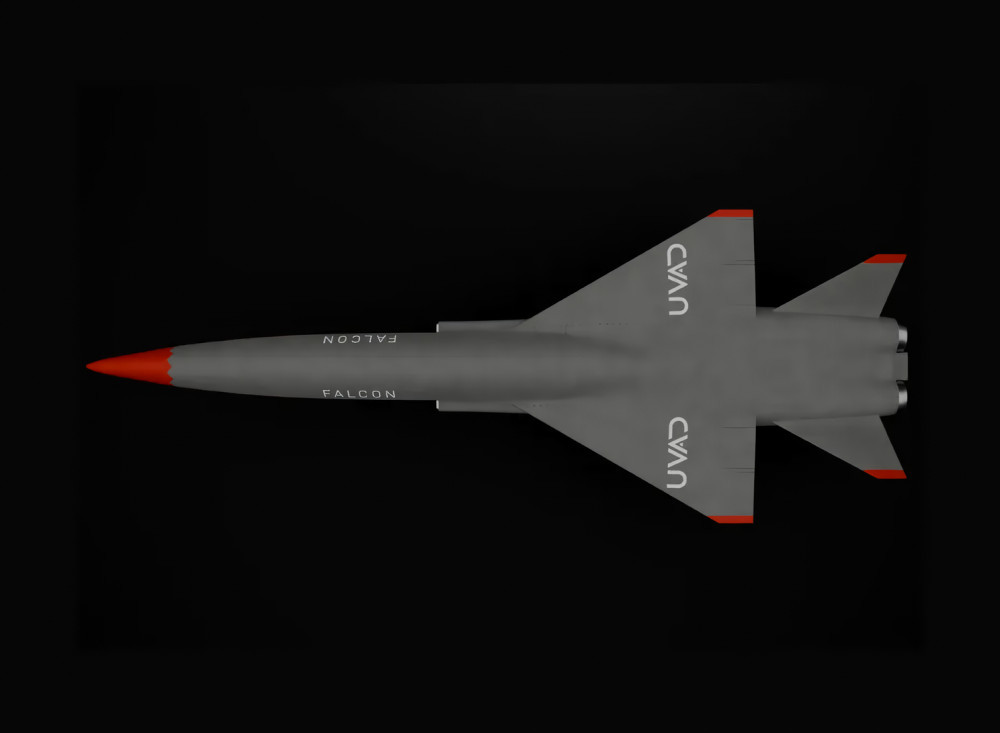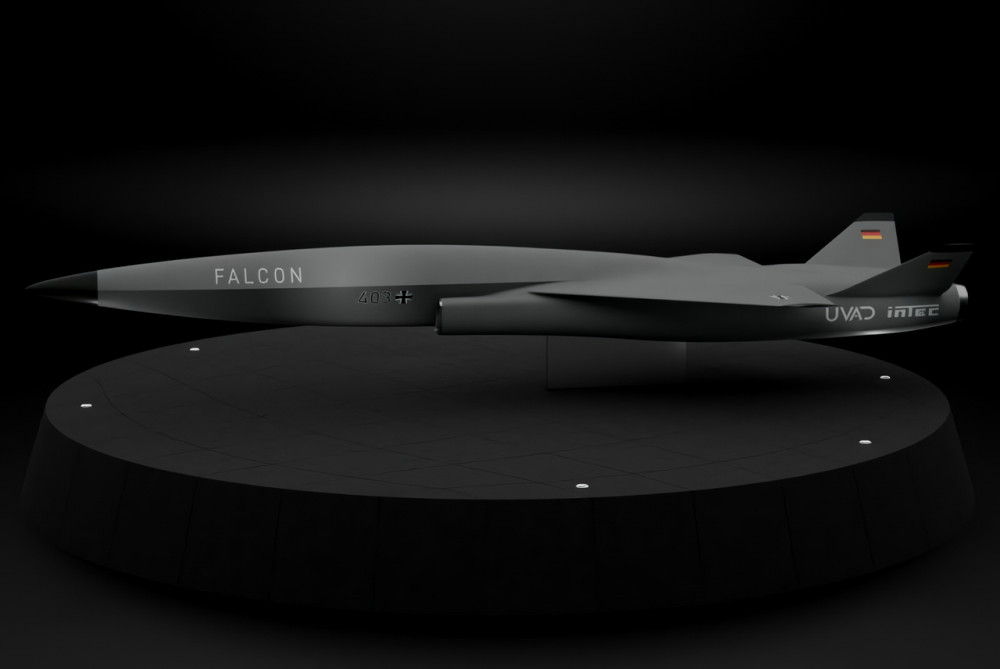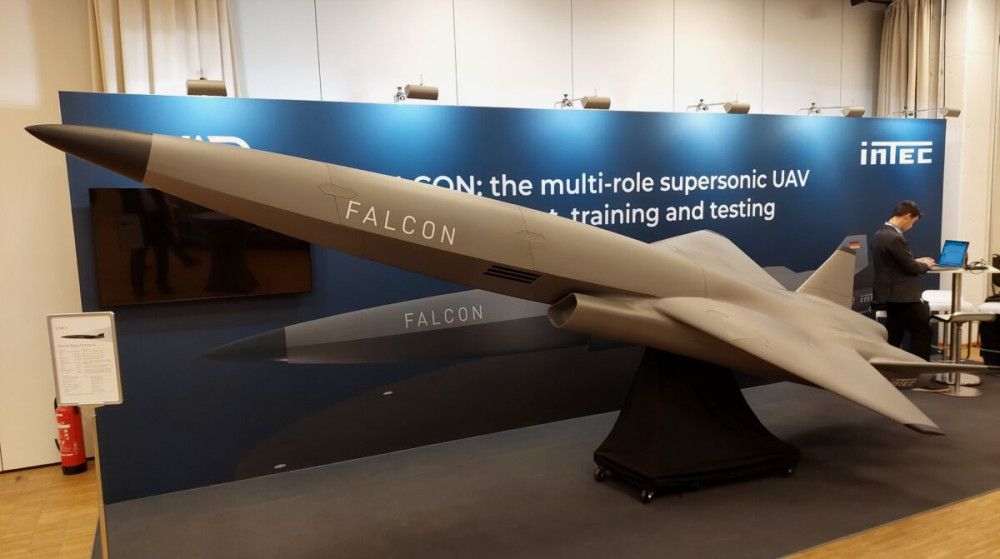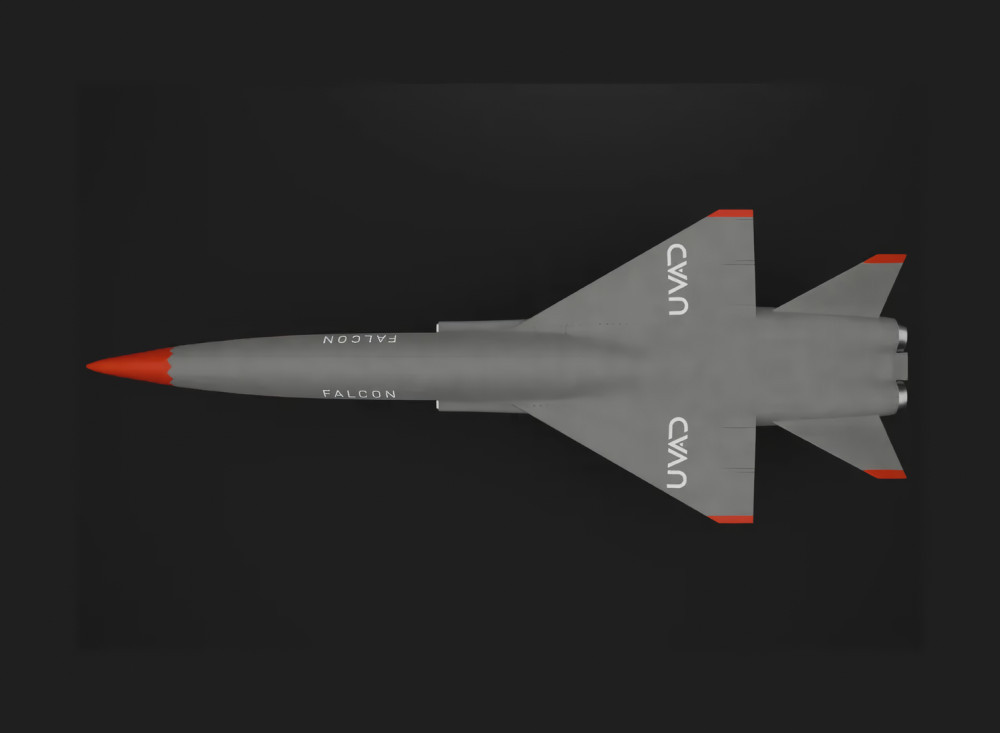
At the Air Force Tech Summit held in Berlin, the German company INTEC Industrie-Technik and Canadian UVAD Technologies introduced the Falcon, a full-scale supersonic drone. This was reported by Hartpunkt.
According to Simon Volkman, INTEC's sales manager, the drone is designed to simulate enemy attacks at low altitudes, flying just a few meters above the sea surface at speeds of 1.3 Mach. In higher atmospheric layers, the Falcon can reach speeds of up to 1.6 Mach.
The drone is powered by two European-made engines that allow it to fly supersonically without using afterburners. The first flight of the Falcon is scheduled for late 2026 or early 2027.
Volkman noted that the device has additional features, including the ability to transport various payloads weighing up to 50 kg, which can include different sensors and electronic warfare systems. A satellite communication system is also planned to be installed. For onboard computing, a power supply of 4 kW is used.
According to UVAD, the Falcon measures 5.8 meters in length, with a wingspan of 2.2 meters, and a flight duration of over 30 minutes. The current takeoff weight is limited to 450 kg due to the use of a launch catapult, but INTEC is already working on a new catapult capable of launching models weighing up to 800 kg. It is reported that after the flight, the drone lands using a parachute and an air cushion.
The company emphasizes that the drone is designed with cost-effectiveness in mind to minimize critical losses.
INTEC is considering local production of the Falcon if orders arise in Germany or Europe.
Additionally, Ukraine is set to deploy its first "drone wall" to protect cities and critical infrastructure from Russian UAVs and guided bombs.