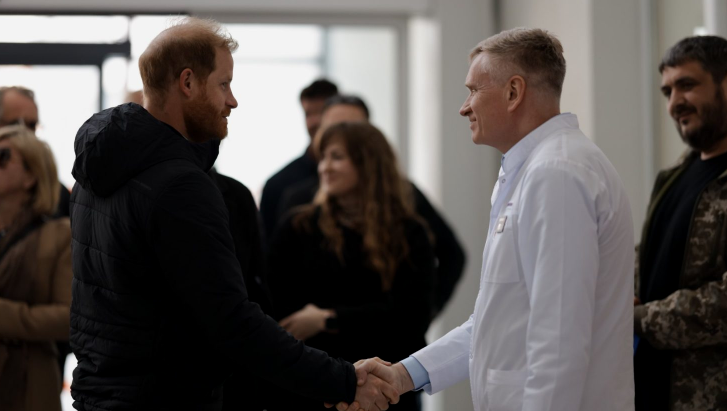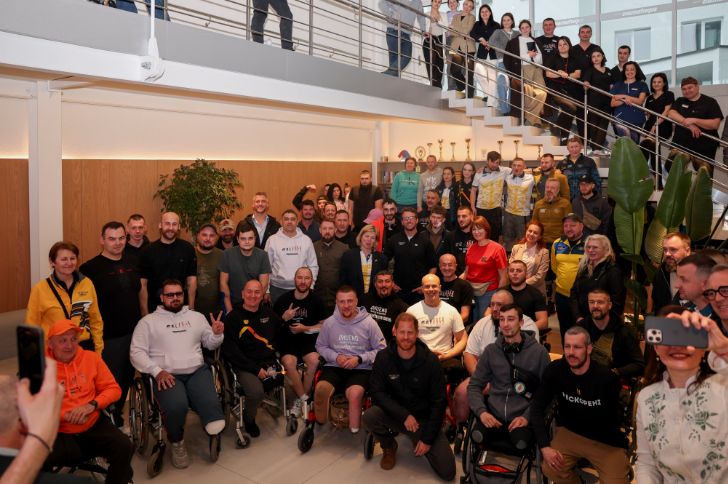
Prince Harry, the Duke of Sussex, made an unannounced visit to Ukraine, where he attended the Superhumans Center, a specialized clinic for the treatment and rehabilitation of injured soldiers.
This information was shared by Andrii Stavnitzer on Facebook.
Harry served in the British Army for ten years, having been deployed to Afghanistan twice, where he lost several close friends. Using his fame and influence, he has significantly contributed to raising awareness about veterans worldwide. In 2014, he founded The Invictus Games Foundation in the UK, which hosts global sporting events for injured and wounded servicemen and veterans.
This visit continues his long-standing commitment to veteran support, as he established the Invictus Games Foundation in 2014 to aid injured military personnel, as noted by entrepreneur Andrii Stavnitzer.
Prince Harry met with athletes who participated in this winter's games and offered compliments to all defenders present.
Additionally, he met British volunteer Eddie, who is currently recovering in Ukraine after being injured, and one of the youngest competitors, 10-year-old Roman Oleksiy.
During his visit, Harry observed a surgical procedure where a veteran was undergoing complex surgery to restore hearing.
“This is my first visit to Ukraine, and certainly not my last. It has been an immense honor and privilege to come here with the Invictus delegation and see the incredible rehabilitation and care provided under one roof, specifically designed for this purpose,” Prince Harry said about the center.
Let us remind you that he is the second member of the royal family to visit Ukraine after Sophie, the Duchess of Edinburgh, who was in Kyiv last year.
“My deepest respect goes to a person who could choose any path in life but has dedicated himself to supporting and encouraging veterans who have been injured. He spent several hours with us and left, but I believe that decades from now, when all wars have finally ended, a sign in Lviv will read: 'Prince Harry, Duke of Sussex was here. A true Superhuman,'” wrote Stavnitzer.