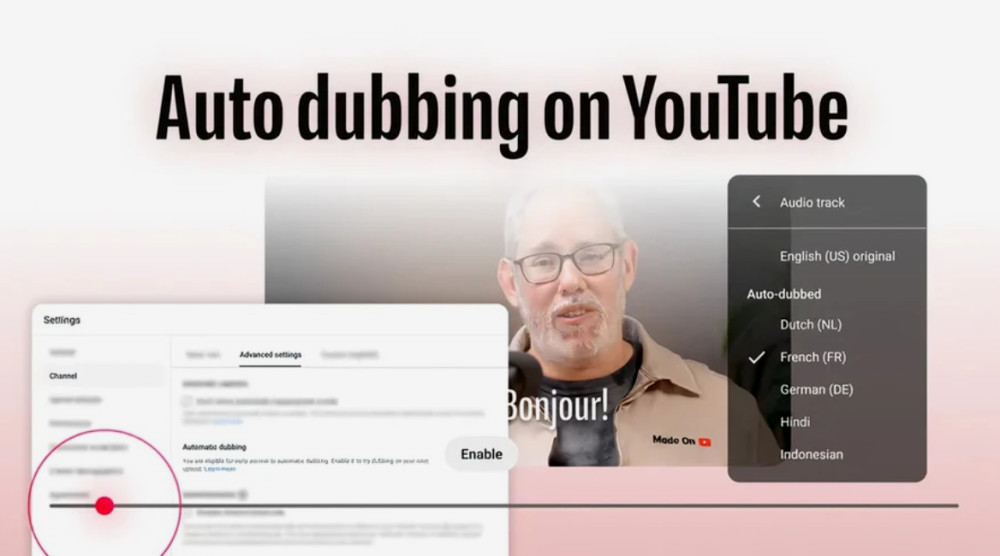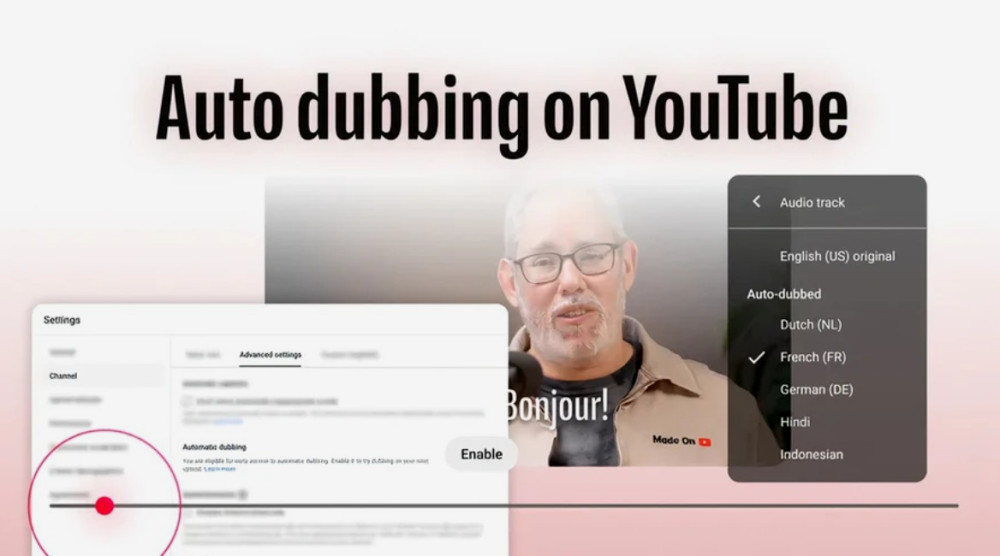
YouTube has launched a new feature for automatic video dubbing based on artificial intelligence, now available to all creators and supporting 27 languages, including Ukrainian.
The development of this technology took several years: it was first introduced in 2023 with limited access for a small group of creators, and by September 2025, the feature was rolled out to most channels.
This feature allows users to watch videos in different languages, helping creators to broaden their audience. YouTube emphasizes that using automatic dubbing does not negatively impact the promotion algorithms of original content, and can actually enhance its discovery across languages. Creators not wishing to use AI dubbing can upload their own audio tracks or completely disable the option.
Users can check the availability of additional languages via the "Audio Track" menu in the video settings.
YouTube acknowledges that the technology does not always accurately convey tone or emotion during video dubbing. To address this issue, the company is introducing the "Expressive Speech" feature, available in eight languages: English, Hindi, French, German, Indonesian, Italian, Portuguese, and Spanish. Additionally, the company is testing a Lip Sync feature that synchronizes lip movements with translated audio, making dubbed videos appear more natural.
The settings now include a "Preferred Languages" option, allowing users to select the languages they want to watch videos in. This selection applies to dubbed audio as well as localized titles and descriptions. If the original version is already available in one of the chosen languages, YouTube will not apply AI dubbing and will play the original audio track.
Furthermore, YouTube has implemented an automatic smart filtering system that determines when dubbing is inappropriate, such as in music videos or silent clips.